One incident. One platform. Every phase covered.
Follow a real emergency from 72 hours out through activation, field operations, command, community notification, FEMA recovery, and after-action review — all handled in one system.
The storm is coming. You're already ahead of it.
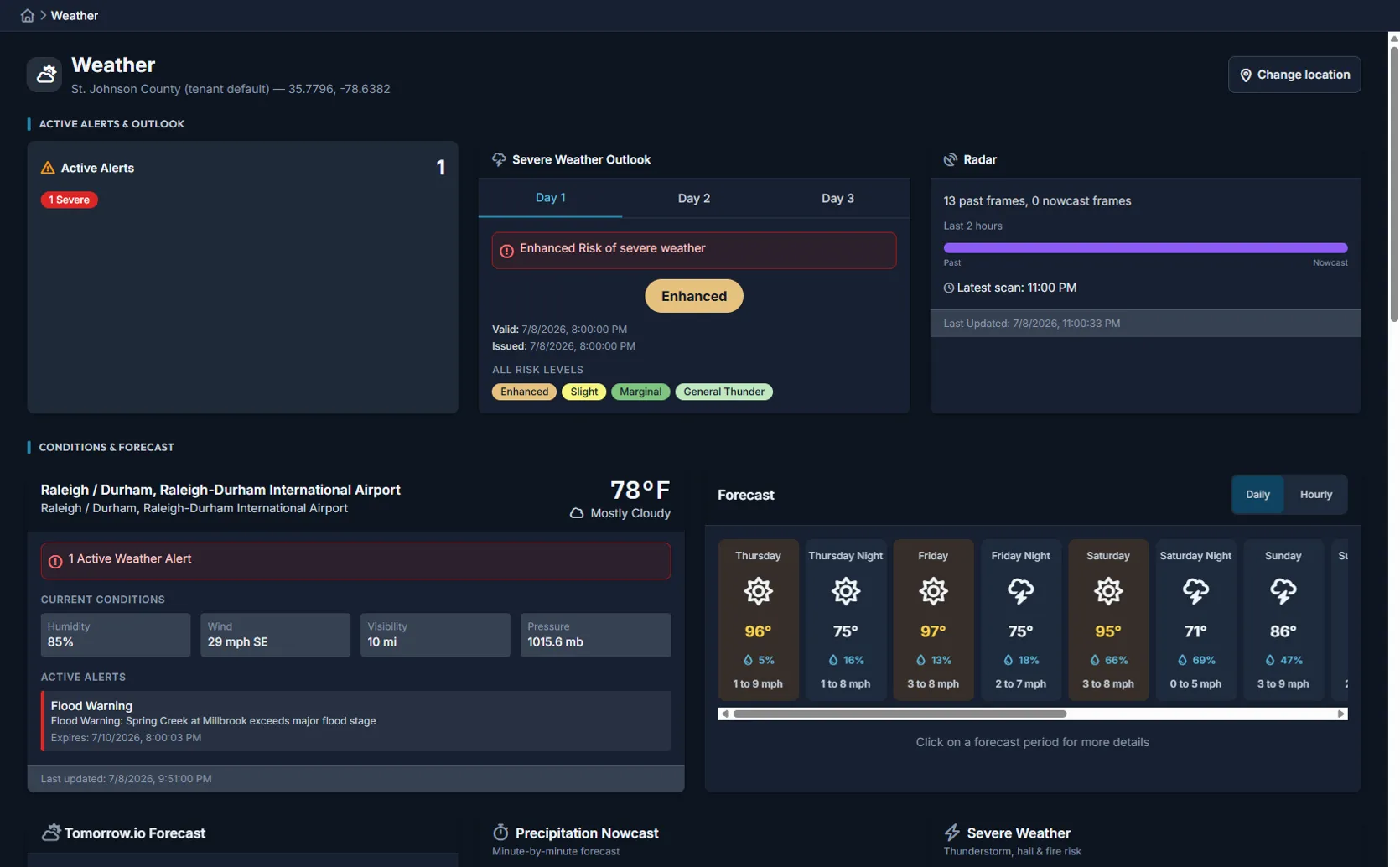
Weather intelligence from 15+ sources feeds directly into your dashboard. Command Bridge pulls National Weather Service alerts, radar, river gauges, air quality, and fire weather data into one view — and triggers automated alerts when thresholds are crossed. Your continuity of operations plan is one click away.
- Weather from 15+ sources on one dashboard — no switching between sites
- Set thresholds for wind speed, flooding, or air quality to trigger automatic alerts
- Pull up your continuity of operations plan instantly
- Pre-stage shelter locations and evacuation routes on the map
Incident created. Command staff assigned. Forms already filling themselves.
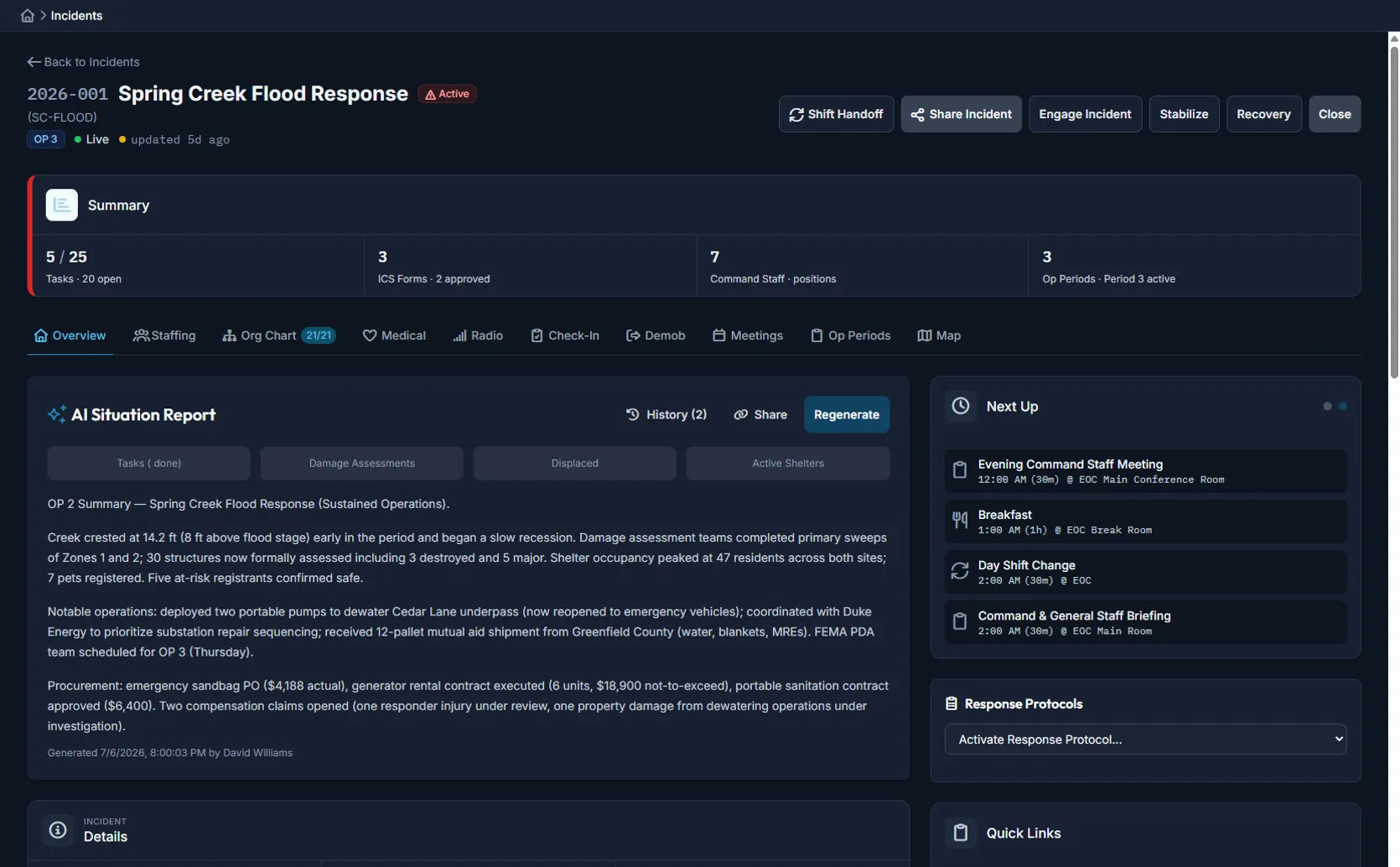
Create the incident and assign your command staff. ICS forms auto-populate from the incident data you've already entered — no retyping names, dates, or objectives into every form. Digital signatures replace the paper chase.
- Full ICS command structure — IC, Operations, Planning, Logistics, Finance
- ICS forms auto-fill from incident data — 205, 206, 209, 214, 221, and more
- Digital signatures from any device — typed or drawn
- AI generates incident summaries and briefing documents in seconds
Cell towers are down. Your field teams keep working.
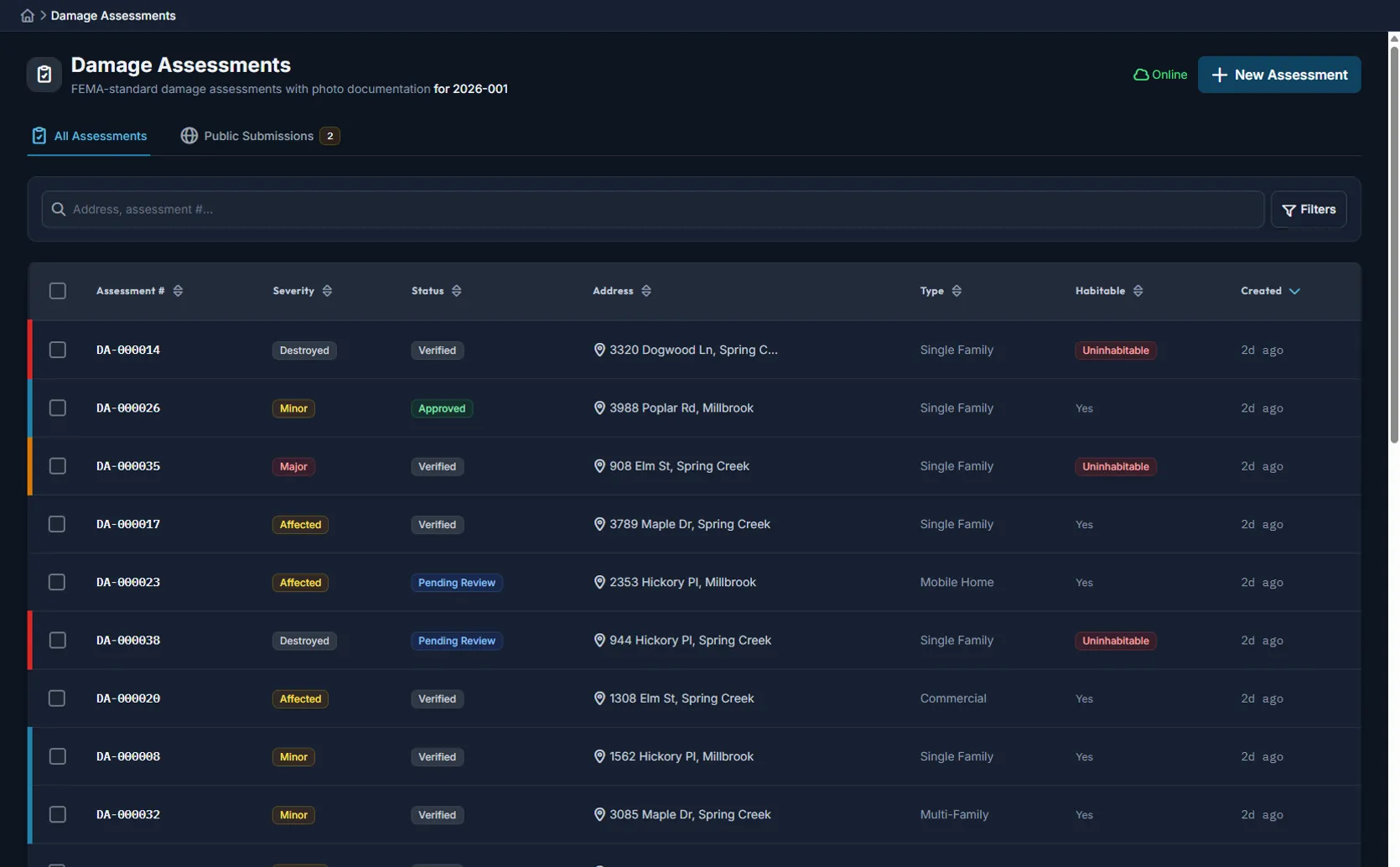
Field teams deploy with a purpose-built mobile app designed for disaster conditions — large buttons, simplified navigation, and full offline capability. Damage assessments, shelter check-ins, supply requests, and GPS tracking all work without cell service. Everything saves to the device and syncs when signal returns.
- 17 modules work without any internet connection
- Damage assessments with geotagged photos — online or offline
- Shelter check-in with resident tracking from a tablet
- SOS panic button alerts command staff immediately
One map. Every team. Every data layer. Real time.
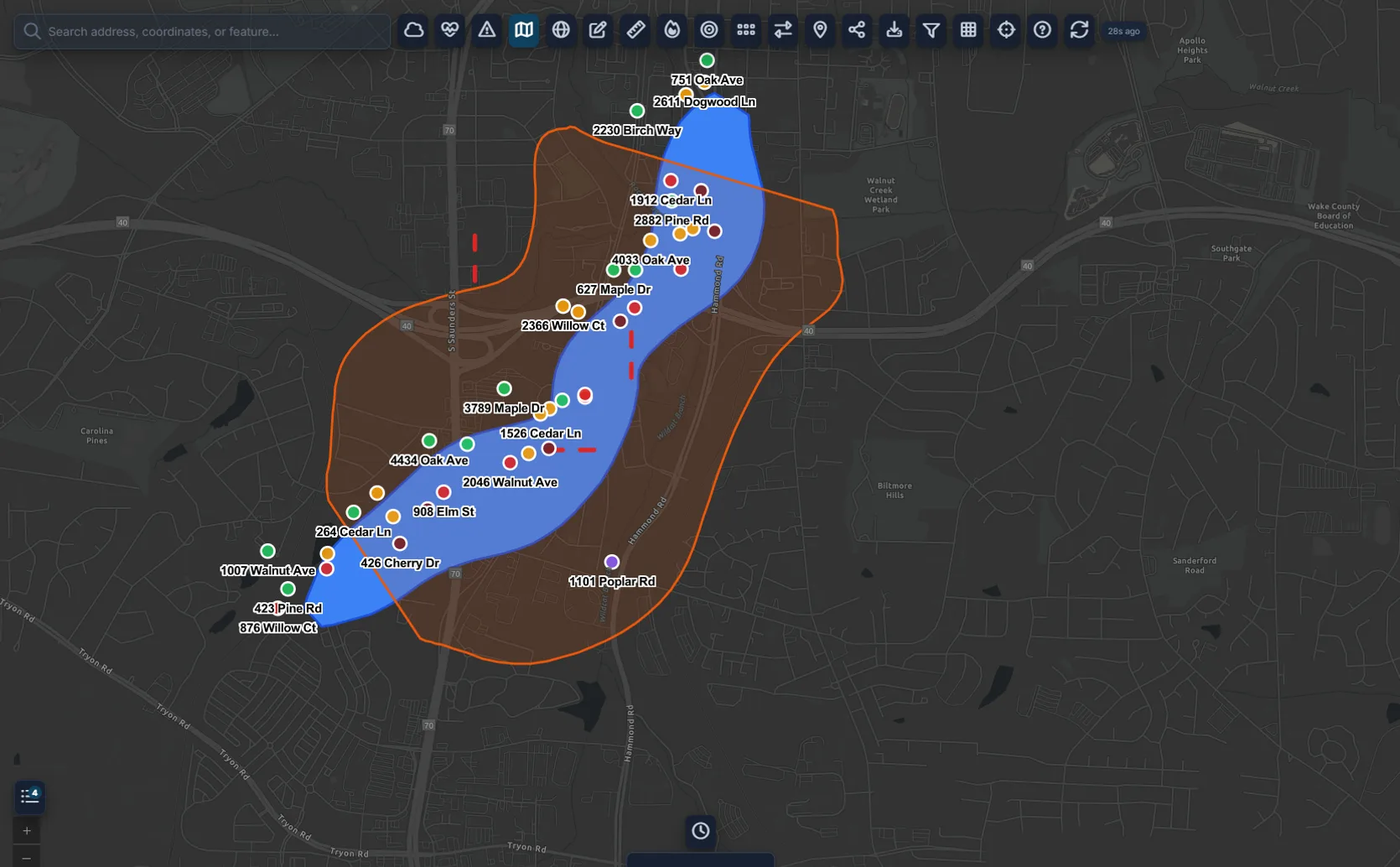
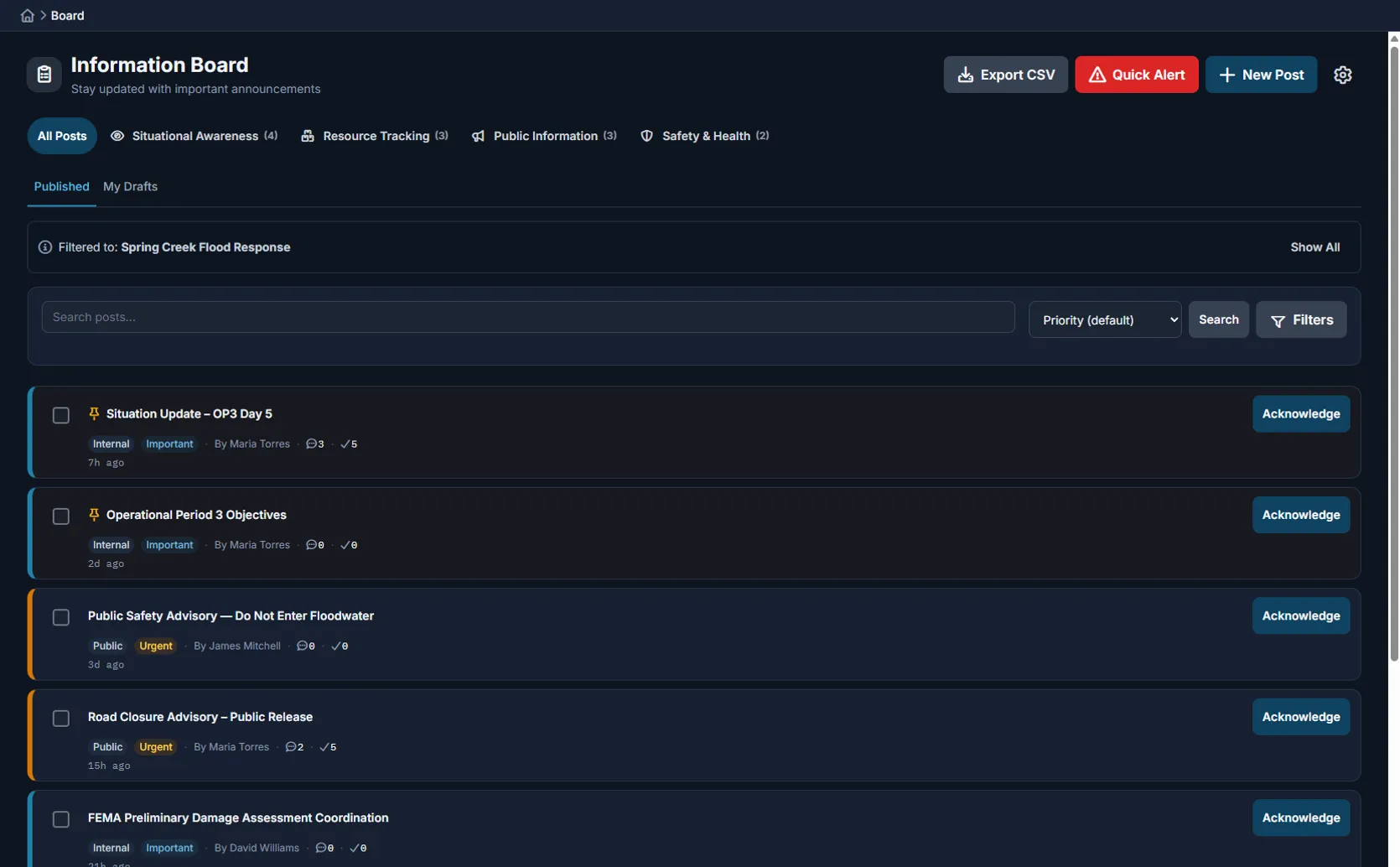
Your operational map shows everything in one view — personnel locations, weather conditions, damage reports, road closures, shelter status, and resource deployments. When something changes in the field, command sees it immediately. The command post board keeps everyone aligned across shifts.
- Unified map with personnel, weather, damage, infrastructure, and resources
- Real-time GPS tracking for every field team member
- Command post board for critical updates across shifts
- Shared map views so everyone sees exactly what you're pointing at
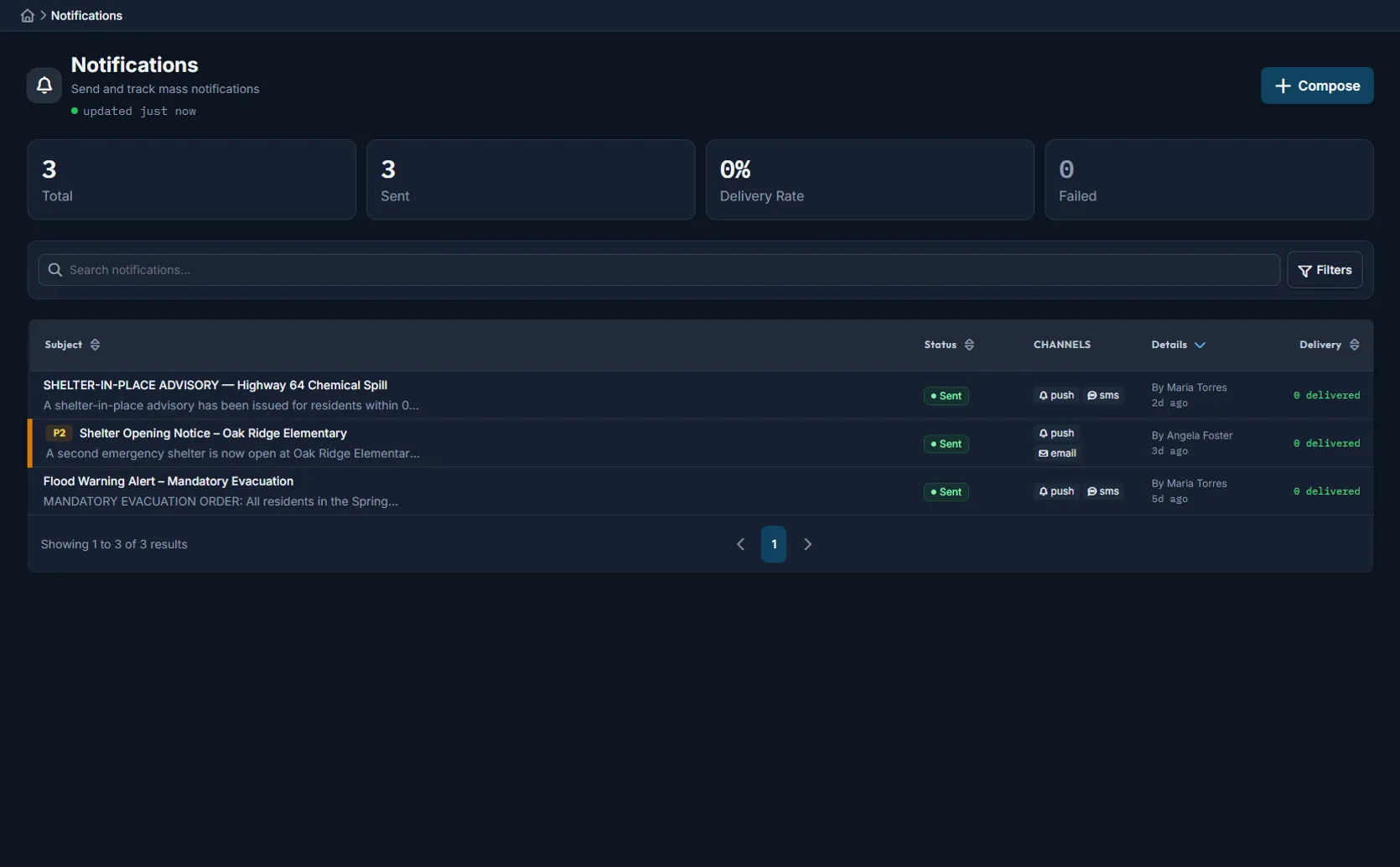
One message. Five channels. Every resident who needs to know.
Compose a single notification and deliver it via text, email, voice call, push notification, and app alert simultaneously. Pre-built templates for evacuations, shelter openings, and road closures get the word out fast. Your branded public portal gives residents a single place for official information — no login required.
- Text, email, voice, and push notifications from one screen
- Pre-built templates for common emergency notifications
- Public portal for shelters, closures, updates — no account needed
- Citizens report damage directly into your assessment queue
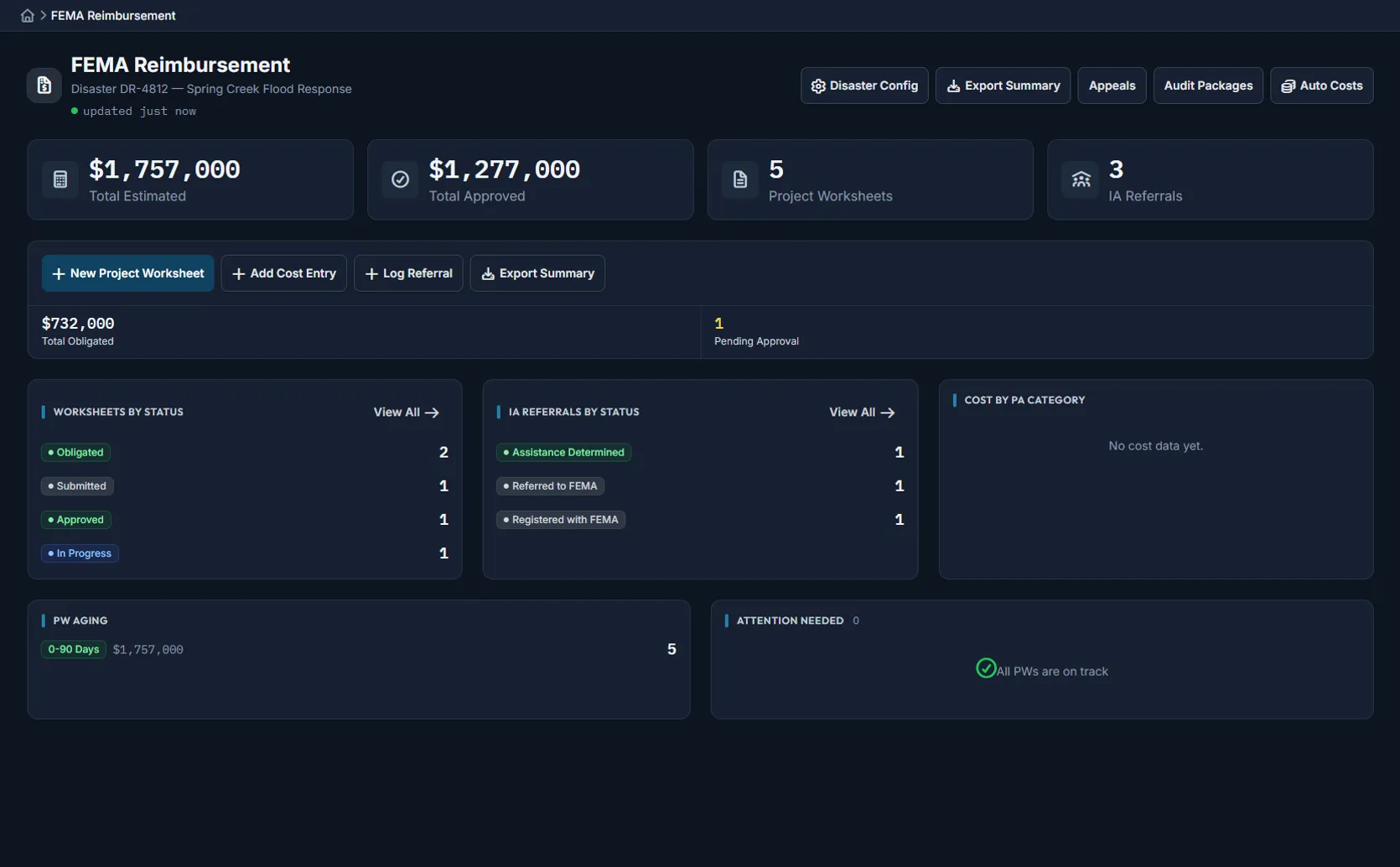
Every dollar is already tracked. Every hour documented.
Because field teams documented damage, hours, and costs during the response, your finance section isn't starting from scratch. Force account labor, equipment rates, and supply costs are organized by FEMA Public Assistance category. Project worksheets are ready for submission — not reconstruction.
- Response costs tracked by FEMA PA category (A through G) as they happen
- Force account labor hours and equipment rates documented in real time
- Project worksheets maintained throughout — ready for FEMA submission
- All seven FEMA Community Lifelines tracked in one dashboard
Capture what worked. Fix what didn't. Be ready next time.
The incident is closed, but the work isn't done. Command Bridge gives you a structured after-action review process — corrective actions assigned to owners with deadlines, lessons documented, and improvement items tracked to completion. When the next event hits, your team is better prepared.
- Structured after-action review with corrective action tracking
- Assign improvement items with owners and deadlines
- Full incident archive with every form, message, and map annotation preserved
- Custom reports with agency branding — PDF or spreadsheet export
Want the full feature list?
Everything Command Bridge includes, organized by capability area.
- Full lifecycle management from activation to closure
- ICS forms auto-populate from incident data — 205, 206, 209, 211, 214, 221, and 230CG
- Operational period tracking with objectives and assignments
- Multi-agency data sharing with controlled access
- AI-generated incident summaries and briefing documents
- Multi-incident dashboard for daily operations
- Interactive map with every data layer on one canvas
- 15+ weather data sources integrated directly
- Real-time GPS tracking for all field personnel
- Drawing and measurement tools for zones and routes
- Shared map views with live cursors
- Geofencing with automatic boundary alerts
- Purpose-built mobile app for disaster conditions
- 17 modules work without any internet connection
- Damage assessment with geotagged photos
- Shelter check-in with resident tracking
- Supply request workflow from the field
- 7 check-in types including welfare and safety checks
- Native mobile app for iOS and Android
- Mass notification across text, email, voice, push, and app alerts
- Pre-built templates for evacuations, closures, and shelter openings
- Command post board for critical internal updates
- Public community portal — branded, no login required
- Alert subscriptions for residents by location
- Citizen damage reporting intake
- Costs tracked by FEMA PA category (A through G) during response
- Force account labor and equipment documentation
- Project worksheet management with cost share calculations
- FEMA Community Lifelines dashboard — all 7 lifelines
- Infrastructure status and restoration tracking
- After-action reviews with corrective action tracking
- Custom report builder with agency branding
- Fleet management with maintenance and certification tracking
- Mission planning with waypoints and safety boundaries
- Live video streaming to command staff
- Thermal imaging with AI hotspot detection
- Search pattern coordination across multiple aircraft
- Chemical dispersion modeling for hazmat response
- Fire spread prediction on the operational map
- Visual workflow automation for SOPs
See Command Bridge handle your operations
Try Command Bridge free for 90 days — one platform that manages incidents, coordinates field teams, notifies your community, and tracks FEMA reimbursement.